Clayesmore School
Iwerne Minster, Dorset, United Kingdom
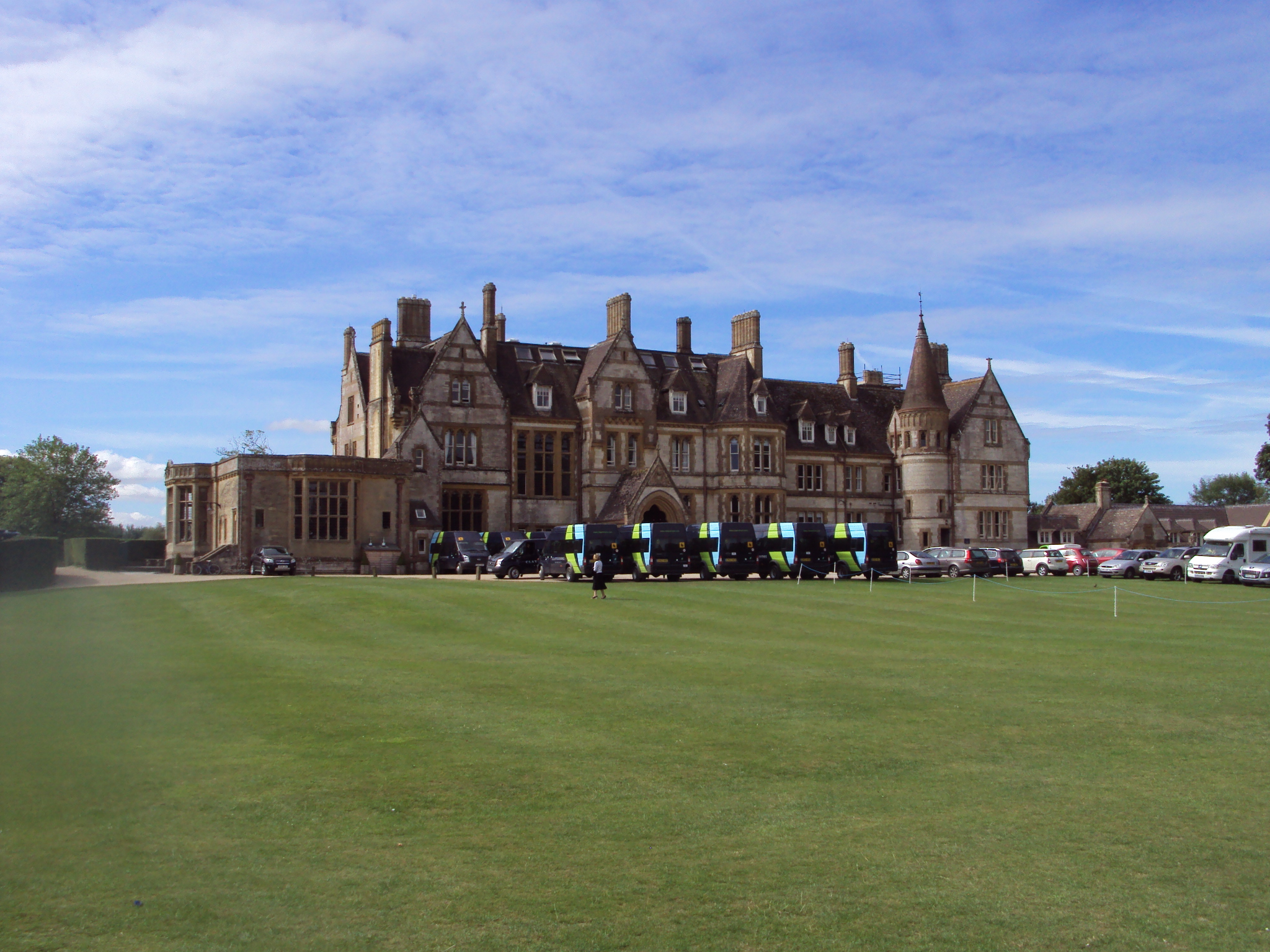
Photo: Johan VAN DIJK · CC BY-SA 2.0
Boardingly Worldly ranking
Boardingly’s assessment — an estimate from public data, not a statement of fact about the school. How we score.
The Worldly ranking measures a school's external standing from publicly sourced signals — academic results, press coverage, alumni and awards — scored out of 100. Signal coverage: 90%.
About this school
The manor house at Iwerne Minster sits at the foot of Cranborne Chase, and if you visit on the right afternoon you will see pupils crossing the grounds towards a war memorial chapel that has anchored the place since the school arrived here in the summer of 1933. Clayesmore had already moved twice by then, from Pangbourne to Winchester, before settling into this fold of Dorset countryside. That restlessness followed by permanence tells you something. This is a school that eventually found where it wanted to be, and it has spent ninety years digging in. But heritage and a good chapel do not form a child, and it would be lazy of me to let the setting do the arguing.
Here is the verdict before the atmosphere, because the atmosphere is the easy part. Clayesmore is a school to keep on a shortlist conditionally, not to warm to on the strength of its founder's language. Lex Devine set it up in 1896 on the belief that a child should leave with more than a set of marks, and the school still talks the vocabulary of values and the whole child. That is a decent aim, honestly stated. It is also the aim every boarding school in Britain claims. The question is never whether the words exist. It is whether the daily machinery supports them, and on that the public evidence is thin. In our view the pastoral promise should be treated as a claim to test, since the public evidence to confirm it is thin.
The single most important number to understand is that the age range runs from three months to eighteen. This is not a senior boarding school of 430; it is a whole foundation. The preparatory school joined in 1974, co-education arrived the year after, and the 430 figure spans nursery-aged children through to sixth form. The senior full-boarding community a fifteen-year-old would actually join is a good deal smaller than that headline implies, and how much smaller is precisely what a family must extract from the school before anything else. Ask for the number of full boarders by year group, the split between day, weekly and full boarding, the size of the sixth-form boarding cohort, and how many pupils are actually on-site on an ordinary Saturday night. A small full-boarding school can be intimate and closely known. It can also be quiet, socially narrow and isolating, with British boarders drifting home at weekends and international pupils left clustered together. Nothing in the public record tells you which of those Clayesmore is, and I will not pretend otherwise. I had been minded to call the full-boarding model the school's real strength. That is backwards. It is only a strength if the weekend numbers hold, and until a family sees them, it is an open question.
The same discipline applies to formation. If you want to know whether the character-first talk is real, do not read the ethos statement; interrogate the operating system behind it. How long have the houseparents and heads of department actually been in post, because longevity in the common room tells you more than any brochure. What is the tutor-to-pupil ratio, and who staffs the houses on Friday, Saturday and Sunday nights. What did the most recent inspection find. What does the school do about bullying, and what does its own pupil survey say. Where academics are concerned, do not accept the whole-child framing as a soft substitute for rigour. Ask for GCSE and A-level results, for value-added, for the range of subjects a small sixth form can genuinely sustain, and for university destinations, which I do not have and will not manufacture. An international family paying UK boarding fees usually needs both human development and credible outcomes, and it is a false choice to suggest otherwise.
On the Boardingly Worldly scorecard, which measures how globally networked and publicly visible a school is, Clayesmore scores 34 out of 100. Read that plainly. This is not one of the internationally famous schools whose name opens doors in Singapore or New York; its reach is regional and national. That is a fact, not an insult, and for many families it is beside the point. Bragging Rights sit at 61, reflecting membership of the Headmasters' and Headmistresses' Conference and a founding year of 1896. Alumni Power comes in at 62, the highest of the cited pillars, drawn from 34 identifiable notable former pupils and a LinkedIn network of around 947. That is a modest, active graduate body rather than a powerful one, and a family should ask honestly whether a regional UK brand carries any weight in their home market and whether that alumni network is large enough to be of practical use. Forward Thinking scores 44, with the school signalling engineering and sustainability. Worth asking whether that is workshops and a real programme or a line on a website. The Staffroom View sits at 40, with staff sentiment at 58 out of 100, which is neither a warning nor a reassurance, only a prompt to ask the tenure question above.
One fact deserves plain handling. Clayesmore is now part of the Inspired Learning Group, a commercial operator. This is neither unusual nor damning, but it changes the questions. In our general view group ownership can bring investment; it can, in some cases, also bring fee pressure, staff turnover and decisions made off-site. Ask what has been added, cut or centralised since the group took over, and who sets the school's priorities now.
So, who is this genuinely for. It suits a family who wants a smaller Dorset boarding environment, who has visited on an ordinary weekday and stayed for a meal, and who has come away satisfied on four points: that the senior full-boarding cohort has real critical mass and a living weekend, that the academic trajectory and destinations match their ambition, that the international support (guardianship, EAL, travel, exeat and holiday arrangements, medical cover) is genuinely good rather than merely present, and that houseparents stay long enough to know a child. It should not be chosen on character language alone. And it should be looked at elsewhere by any family whose plans depend on a globally recognised name, on a large and useful alumni network, or on a broad sixth form with strong published outcomes, because on present evidence Clayesmore cannot promise those things. Watch how the adults speak to the children. Then check the numbers. Both, not either.
Sources: School website · Independent Schools Inspectorate (ISI) report · DfE Compare School Performance · Boardingly Worldly Ranking (our scorecard + underlying signals)
Saving is free — create a free account to keep all your shortlisted schools in one place. Full profiles are free to read.
Deep-search report
Get the full report on Clayesmore School
A 6-month subscription for £99 — a deep intelligence briefing that validates this school's Boardingly Worldly Ranking with real evidence (naming names, citing examples, giving numbers), covering every school we profile, plus child-specific recommendations. Launch offer: use code LAUNCH50 for £50 off.
- Worldly Ranking validation — evidence behind each of the 8 pillar scores
- Academic reality — results, destinations, curriculum depth
- Boarding & pastoral life — what day-to-day boarding is actually like
- Is this school creating worldly children?
- Admissions reality for overseas applicants
- Safeguarding & inspection outcomes in plain English
- Fee breakdown, bursaries & realistic all-in costs
- Alumni network, notable alumni & career outcomes
- Recent news, developments & social profiles — last few years, up to this week
- Your child fit score, based on your child's characteristics
£99 for six months' access — enter code LAUNCH50 at checkout for £50 off (£49).
One-time payment via Stripe — six months' access, no auto-renewal. Boardingly does not receive fees from schools.
Anyone can suggest a correction. Schools can update key details directly once their email is verified.
Academics
Qualifications offered
Entrance requirements
Prep School applicants attend a Taster Day; prospective boarders may stay overnight. Applicants for Years 6, 7 and 8 complete English and Maths assessments. Years 9, 10 and 11 applicants complete English and Maths assessments. Sixth Form applicants and scholarship candidates may undertake additional subject-specific assessments. A reference from the current Head is also required.
Exam results
Not yet verified against an approved source. Contact school.
Life & activities
Sports
Arts
Extra-curricular
Boarding & pastoral
Boarding type: Full
Pastoral care: Every pupil is known and supported. The school offers boarding houses, day pupil provision, learning support, health and wellbeing support, and a distinctive LEX programme delivered on Saturday mornings over five years to build skills, confidence and self-knowledge.
Latest inspection
Inspection outcome not yet verified.
Common questions
- How much are the fees at Clayesmore School?
- At Clayesmore School, full boarding is £16,503.60 per term (Year 9 to Year 13) and day fees are £11,890.80 per term (Year 9 to Year 13). These are indicative figures from public data — always confirm the current year's fees directly with the school.
- Where is Clayesmore School?
- Clayesmore School is in Iwerne Minster, Dorset, United Kingdom (DT11 8LL).
- Is Clayesmore School a boys', girls' or co-educational school?
- Clayesmore School is a co-educational school, taking both boys and girls.
- What ages does Clayesmore School take?
- Clayesmore School educates pupils aged 3 months - 18.
- Does Clayesmore School offer boarding?
- Yes — Clayesmore School offers full boarding.
- How many pupils are there at Clayesmore School?
- Clayesmore School has approximately 430 pupils.